
01
Catalogue & merchandising
Products, variants, bundles, collections and metadata modelled around your real range, with fast search and filtering built in.
- Variants & options
- Bundles
- Collections
- Search & filter
Own your checkout, kill the platform tax
Bespoke ecommerce means a headless store you own, engineered on Node.js and Next.js, with a Stripe-native checkout you actually own. Instead of paying a platform tax and bending your business to fit Shopify or WooCommerce, we model your catalogue, pricing, tax and fulfilment rules around how you really sell, integrate Stripe for payments and subscriptions, build the operator tools your team needs, and hand you an auditable codebase with the customer data in your own database.
Commerce operations · system view
Revenue · today
Payment rails
Order stream
New order
#10472 · £184.00
Checkout pipeline · system view
A shopper browses, adds to cart and pays through Stripe. A signed, idempotent webhook confirms the order, fulfilment fires, and the data lands in a database you own. Every stage is yours, no platform tax in the middle.
01
Edge-cached
02
Server state
03
Cards + wallets
04
Signed + idempotent
05
Inventory synced
06
Your database
Why you need this
Pain 1
1 to 2% of GMV skimmed off the top, plus a stack of paid apps. At scale that is a full engineer's salary handed to a platform every year.
Pain 2
B2B price lists, bundles, tax rules and fulfilment logic get patched with brittle $200/mo apps and manual ops work that never quite holds.
Pain 3
A slow, locked-in checkout bleeds conversions to faster rivals, and you cannot fix it because you do not control the code.
Platform-tax calculator
Drag to your monthly sales. This is roughly what you hand to platform fees and the app stack each year, money you keep when you own a Stripe-native build.
Platform tax per year
£27,840
on £960,000 of annual sales
That is £139,200 over five years, often more than the cost of the custom build itself.
Estimate only, based on a blended platform + app overhead of ~2.9% of GMV. Your real figure depends on plan tier, apps and payment mix.

Built around your operation
We model how you really sell, then build the store around it.
The method
A repeatable build path: model the catalogue, integrate Stripe, build the operator tools, harden the webhooks, then migrate and launch on Core Web Vitals you can prove.
01
Map products, variants, pricing, tax and fulfilment rules around how you actually sell, not a template.
02
Stripe-native checkout, payment methods, subscriptions and the customer billing portal, wired for your flows.
03
Operator dashboard for orders, inventory, refunds and fulfilment so your team runs the store, not a spreadsheet.
04
Signed, idempotent webhooks with a dead-letter queue so no paid order is ever lost or double-processed.
05
Migrate catalogue, customers and SEO with redirects in place, then launch on Core Web Vitals you can prove.
Commerce stack
Layer 1 of 4
Next.js RSC · edge-cached · Core Web Vitals
What's included
What you receive
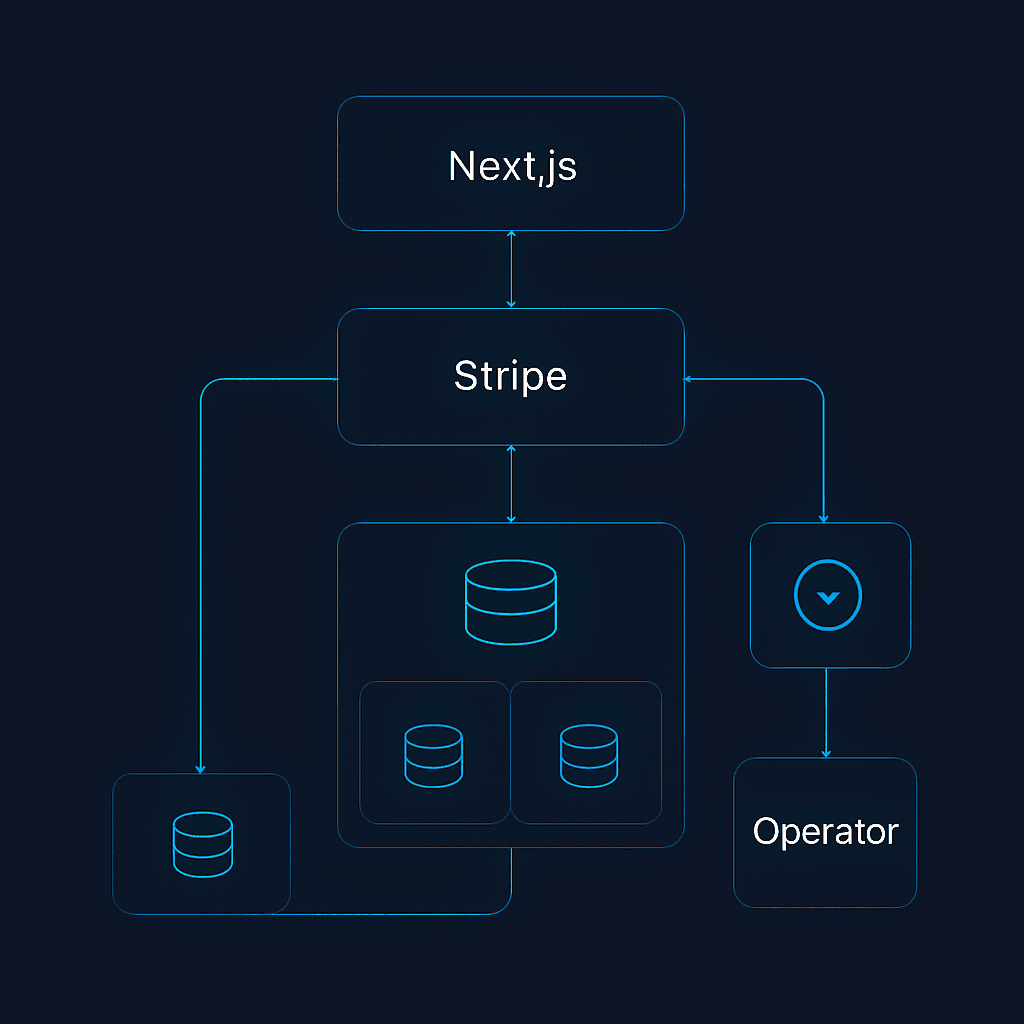
A clear map of the whole stack: storefront, Stripe checkout, Postgres core and webhook operations.
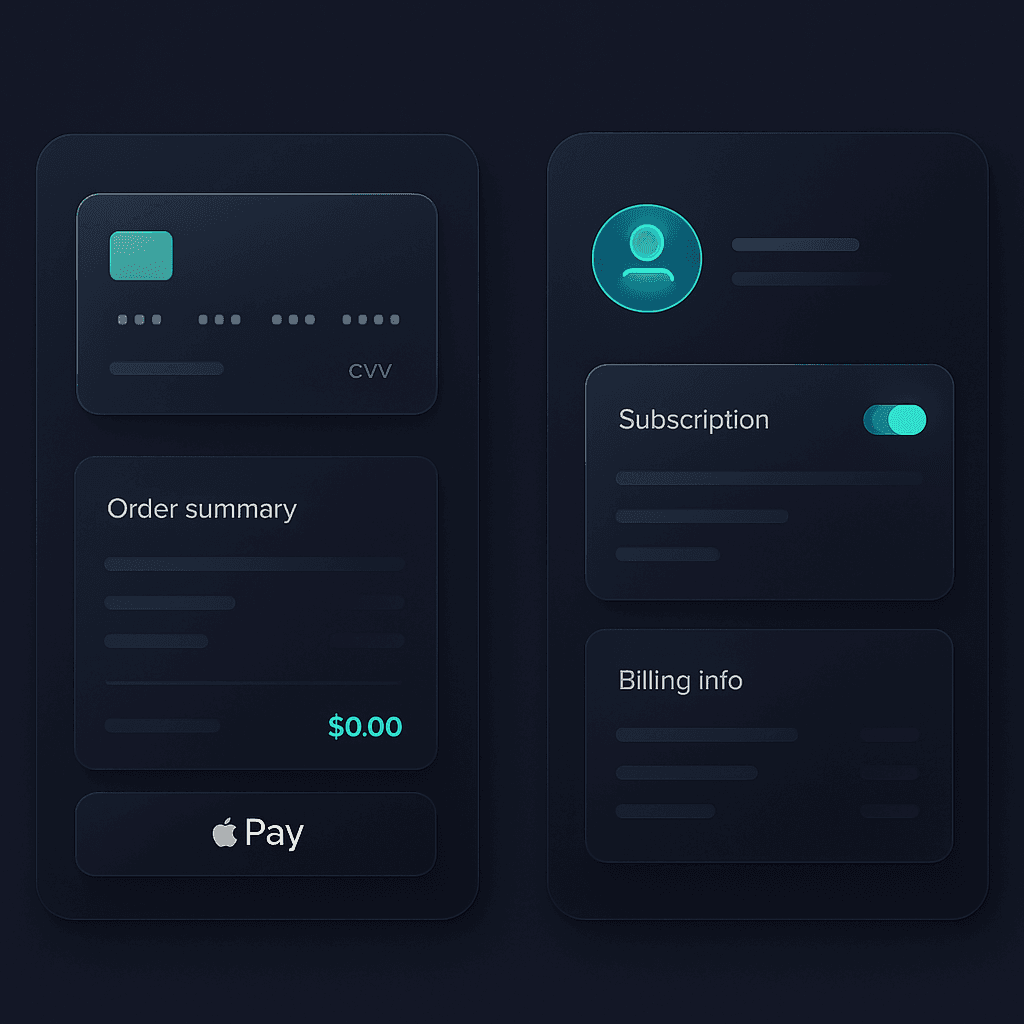
A fast, Stripe-native checkout and a self-serve customer billing portal for subscriptions and invoices.
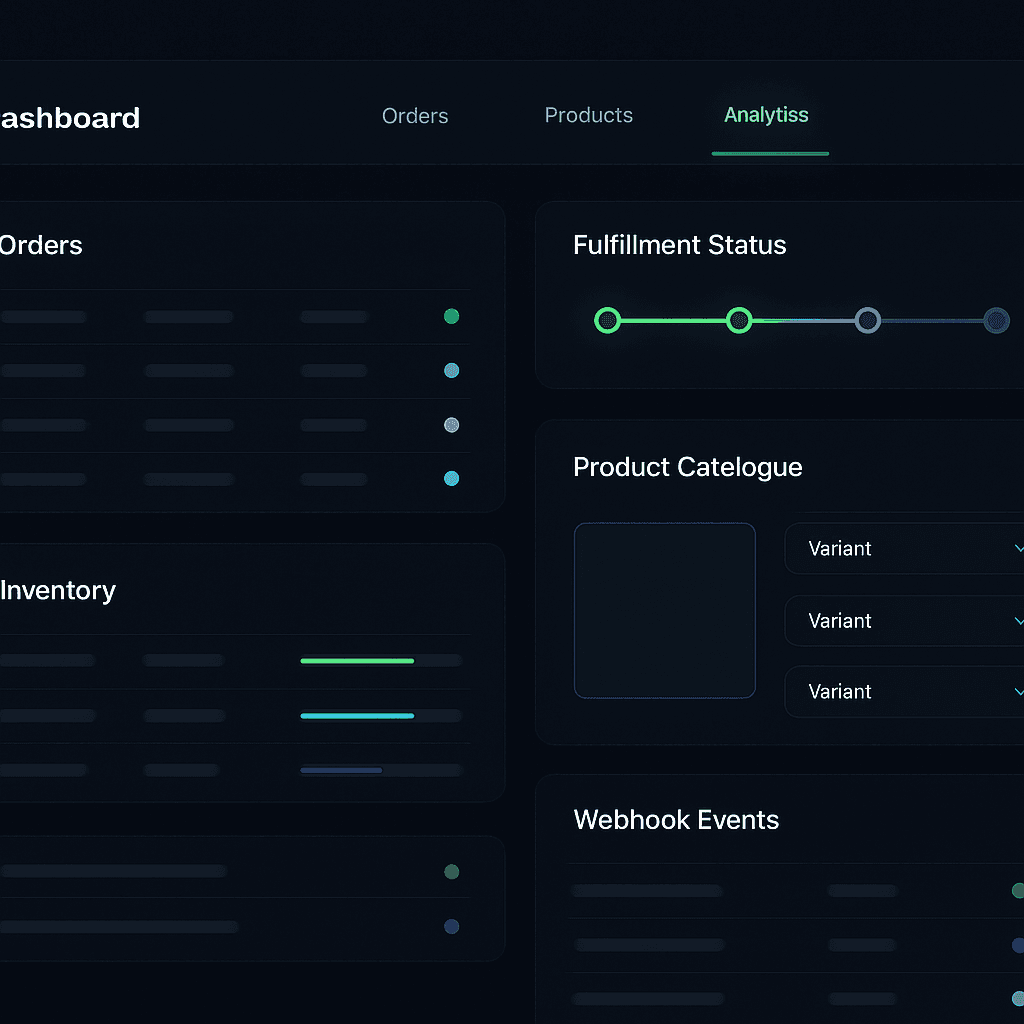
The back-office your team runs the store from: orders, inventory, fulfilment and webhook event log.
Commerce capabilities
From catalogue and Stripe payments to B2B pricing, subscriptions, operations and conversion performance, every capability is built into the codebase, not rented from an app marketplace.

Your team runs it
Products, variants, bundles, collections and metadata modelled around your real range, with fast search and filtering built in.
Stripe-native checkout with cards, wallets, Stripe Tax and 3D Secure, so you take payments globally without a transaction tax on top.
Customer-group price lists, quantity breaks, quotes, purchase orders and net terms for the way businesses actually buy from you.
Recurring plans, trials, metered usage and a self-serve customer portal powered by Stripe Billing, with dunning handled for you.
An operator dashboard with order management, inventory truth, refunds, and idempotent webhooks feeding your fulfilment and ERP.
Edge-cached server components, a Core Web Vitals budget and conversion analytics so you can prove the checkout lift, not guess it.
No lock-in. The stack we build your store on, all of it yours to own and extend.
FAQ
It is a headless, bespoke online store built on Next.js and Node.js with a Stripe-native checkout, instead of a hosted platform like Shopify or WooCommerce. You own the code, the data model and the checkout, and you model your catalogue, pricing and fulfilment around your business rather than fitting a template.
Two reasons: cost and control. Hosted platforms charge a percentage of every order plus a growing stack of paid apps, and they constrain how you can model pricing, tax, B2B and fulfilment. A custom build removes the transaction tax, gives you rules that fit your business and lets you fix performance yourself.
Yes. We migrate your catalogue, customers and order history, set up 301 redirects to protect your SEO, and run the new store in parallel before cutover so there is no traffic or ranking loss at launch.
Through Stripe, natively. We implement Stripe Checkout or a custom checkout with the Payment Element, support cards and wallets like Apple Pay and Google Pay, wire up Stripe Tax, and verify everything with signed, idempotent webhooks so paid orders are never lost or double-counted.
Yes. We build customer-group price lists, quantity breaks, quotes, purchase orders and net terms, alongside normal retail checkout, so the same store serves both B2C and B2B buyers.
Yes. We use Stripe Billing for recurring plans, trials and metered usage, with a self-serve customer portal for upgrades, cancellations and invoices, and automated dunning to recover failed payments.
That is a core reason to go custom. We build on edge-cached server components with a Core Web Vitals budget, server-rendered product and category pages, structured data and clean URLs, so the store is fast for shoppers and legible to search and AI engines.
Yes. You get an operator dashboard for day-to-day work, a conventional codebase with named server actions, and a written runbook. Any senior engineer can read, operate and extend it, so you are never locked to us.
Ready to own your store?
Bring your platform bill. We will show you what the same money builds when you own the store outright.
