
01
OWASP Top 10 coverage
Every build is reviewed against the OWASP Top 10: injection, broken access control, security misconfiguration and the rest, with documented mitigations.
- Injection defence
- Access control
- Secure config
- Crypto failures
Security designed in, not bolted on
Secure web development means building security into the architecture from the first commit, not bolting it on after launch. We hand-code Next.js sites with a strict Content Security Policy, OWASP Top 10 coverage, parameter-bound database queries, row-level security, signed cookies, per-route rate limiting and bot protection on every public form, then hand you an auditable codebase and an operations runbook.
Security posture · system view
Applied to every build, not added on request
Threats intercepted
Bot swarm
blocked at edge
Attack-surface pipeline · system view
Untrusted traffic enters. Six layers of defence inspect, filter and bind it. Only a hardened, safe response leaves. This is the request path on every site we build.
01
Untrusted traffic
02
Bots filtered
03
XSS blocked
04
Signed sessions
05
RLS enforced
06
Safe response
What this fixes
Risk 1
Every plugin is a supply-chain risk, a performance tax and a renewal invoice waiting to break.
Risk 2
Bots scrape your inboxes, fill your CRM with junk and probe relentlessly for credential reuse.
Risk 3
When something breaks at 11pm, no one in the building can read the code or trace the fault.

Threat modelling
We map the attack surface before a line of code is written.
The method
A repeatable secure software development lifecycle: threat modelling, secure architecture, hardening to OWASP Top 10, penetration testing and ongoing monitoring.
01
Map the attack surface, data flows and trust boundaries before a line of code is written.
02
Server-first design, least-privilege access and secure defaults baked into the foundation.
03
Strict CSP, HSTS, secure headers, parameter-bound queries, RLS and rate limits.
04
Automated scanning, dependency audits and manual penetration testing against OWASP Top 10.
05
Logging, alerting and an operations runbook so incidents are caught and contained fast.
Defence in depth
What's included
What you receive

A clear map of every layer of defence, from edge WAF to row-level-secured database.
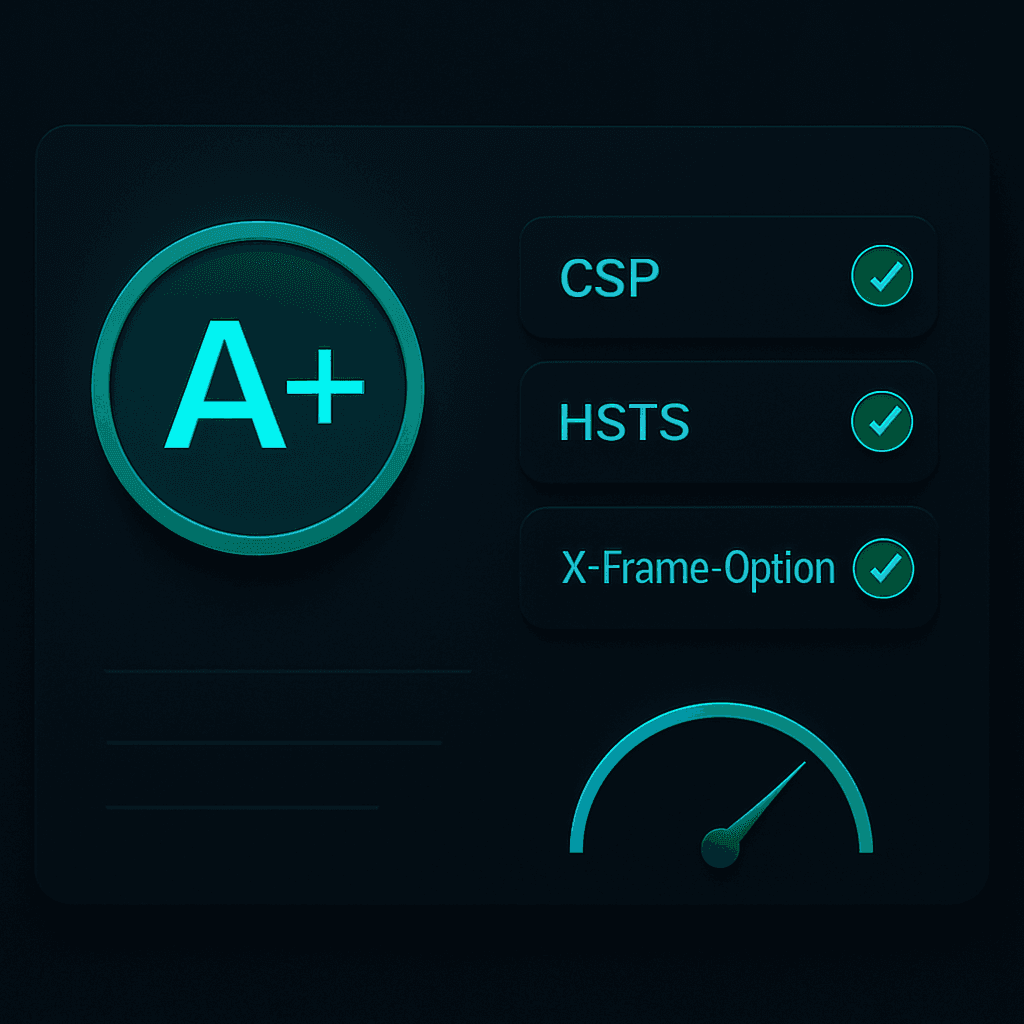
An A-grade scan of CSP, HSTS and secure headers, verified live before we ship.
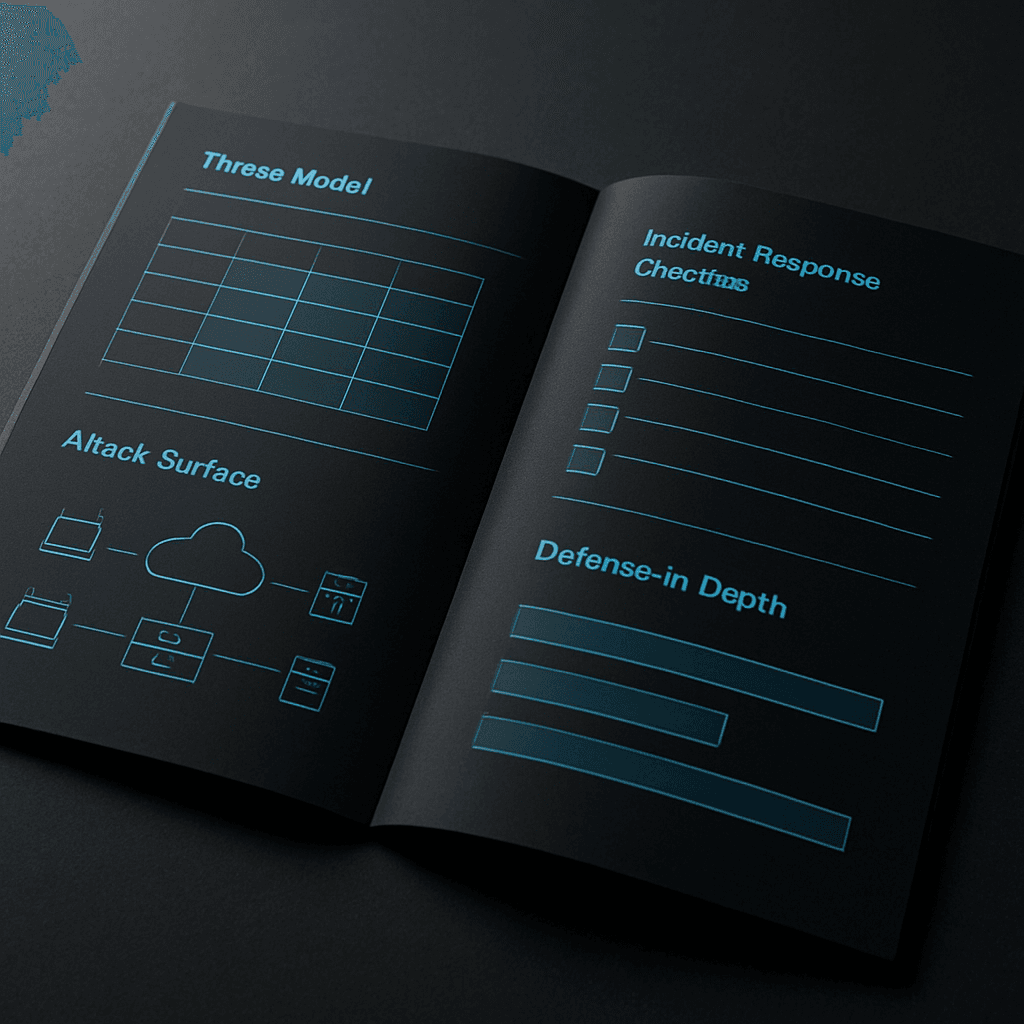
The attack-surface model and the incident-response runbook your team can actually follow.
Security posture
Most agencies treat security as a launch-day checkbox. We engineer it into every layer: OWASP Top 10 coverage, a strict Content Security Policy, hardened database access, bot protection, privacy by design and a fully auditable codebase. Each discipline applies to every build.

Watched in production
Every build is reviewed against the OWASP Top 10: injection, broken access control, security misconfiguration and the rest, with documented mitigations.
A Content Security Policy tuned per build, HSTS with includeSubDomains, and a full secure-header set applied at the edge.
Row-level security and parameter-bound queries mean a compromised query can never read another tenant's data or run injected SQL.
Per-route rate limiting, honeypots and bot heuristics on every public surface so forms and logins stay clean and credential-stuffing fails.
GDPR-aware data handling, signed and httpOnly cookies, minimal data collection and clear sub-processor records for procurement.
Conventional structure, named server actions and a written runbook so any senior engineer can audit, operate and extend the build.
No black box. The stack and tooling we build, test and verify security with.
FAQ
It includes threat modelling before the build, a strict Content Security Policy, OWASP Top 10 coverage, parameter-bound queries with row-level security, signed cookies, per-route rate limiting, bot protection on public forms, and a written operations runbook. Security is part of the architecture, not an add-on.
No. We migrate off them. Plugin-driven stacks are the single biggest source of supply-chain and configuration vulnerabilities we see. Bespoke, auditable Next.js is the product.
Yes. Every engagement is reviewed against the current OWASP Top 10, including injection, broken access control, cryptographic failures and security misconfiguration, with each mitigation documented so your team can verify it.
Yes. We run a vulnerability assessment and security-headers audit, document the gaps against OWASP, then either remediate in place or plan a migration to a hardened build, depending on the state of the code.
We layer per-route rate limiting, honeypot fields and lightweight bot heuristics so junk submissions and credential-stuffing attempts fail without forcing your real users through intrusive CAPTCHAs.
We build GDPR-aware: data minimisation, signed and httpOnly cookies, clear consent handling and documented sub-processors. We are not a law firm, but the technical foundation maps cleanly to what your DPO needs.
Yes. We use a conventional file structure, named server actions and a written runbook, so any senior engineer can read, audit and extend the build. You are never locked to us.
We run automated scanning and dependency audits as standard, and offer manual penetration testing against the OWASP Top 10 as part of larger engagements or on request.
Ready to lock it down?
A senior engineer reviews your current surface and walks you through the exact runbook you would receive, on a 15-minute call.
