
01
RAG and retrieval
Ground answers in your own knowledge with chunking, embeddings and vector search, so responses are sourced and citable.
- pgvector
- Embeddings
- Reranking
AI solutions and agents
AI Solutions at Oxwyn Studio means turning your idea into a grounded, production-ready AI product: retrieval on your own data, agents with guardrails, evaluation before launch and observability after it, so real people can rely on what we ship.
Idea to product
Prompt
Grounded answer
Your policy gives a 14-day refund window on unused items, with store credit up to 30 days.
Sources
2 cited
Eval score
0.96
Cost
$0.004
From idea to live product
We take the idea, ground it in your real data, wrap it in guardrails and evaluation, and ship a product that holds up in front of real users.
What we can build
If you can describe it, we can probably build it. Here is how a handful of real wishes turn into grounded, production AI.
“I wish customers could just ask our docs instead of emailing support.”
A support agent grounded on your docs and tickets, with citations and safe fallback to a human.
“My team spends hours reading reports to find three numbers.”
A research copilot that retrieves, summarises and cites across your document corpus on demand.
“We get thousands of invoices and someone types them in by hand.”
A structured extraction pipeline that turns messy PDFs into validated, typed data with confidence scores.
“I want an assistant that can actually do things, not just chat.”
A tool-using agent that books, updates and queries your real systems through guarded function calls.
“Our users never find the right product in our huge catalogue.”
A semantic search and recommendation engine over your catalogue using vector embeddings.
“I sketched an idea on a napkin. Can it even be built?”
A blueprint, a working prototype, then a hardened production build. We start from the napkin.

Where it starts
Bring us the idea you cannot stop thinking about. Napkins welcome.
Why you need this
Pain 1
The demo dazzled, then real users arrived. Hallucinations, timeouts and runaway token costs turned a magical prototype into an unreliable feature nobody trusts.
Pain 2
The model has nothing real to stand on, so it confidently invents answers about your own product, pricing and policies. Without grounding, fluency is just a better-spoken guess.
Pain 3
Prompt injection, jailbreaks and unbounded spend stop being theory the moment you go live. Without guardrails, one crafted message becomes an incident, a leak or a bill.
See it for yourself
Pick a question, then toggle grounding. Ungrounded, the model gives a confident, plausible guess. Grounded, it answers from your real data and cites the source.
Question
What is your refund window?
Grounded answer
Your policy gives a 14-day refund window on unused items, with store credit up to 30 days.
The method
A repeatable build path: frame the outcome, ground the data, wire the agent, evaluate and harden, then ship with observability your team can operate.
01
Define the job to be done, the success metric and the failure modes before any model is chosen, so we build a product, not a tech demo.
02
Ingest, chunk and embed your knowledge into a vector store so answers come from your truth, not the model's imagination.
03
Build the retrieval, tools and orchestration through the Vercel AI SDK with streaming, function calls and model routing.
04
Add a prompt firewall, output validation and an eval harness that scores accuracy and hallucination before anything ships.
05
Deploy with cost caps, rate limits, tracing and dashboards so you see every call, every cost and every failure in production.
Grounded by design
Grounded AI architecture
User query
from your app
Prompt firewall
sanitise + detect injection
Retrieval
vector search on your corpus
Model
via AI Gateway
Output validator
schema + safety check
Cited answer
sourced + grounded
What's included
What you receive
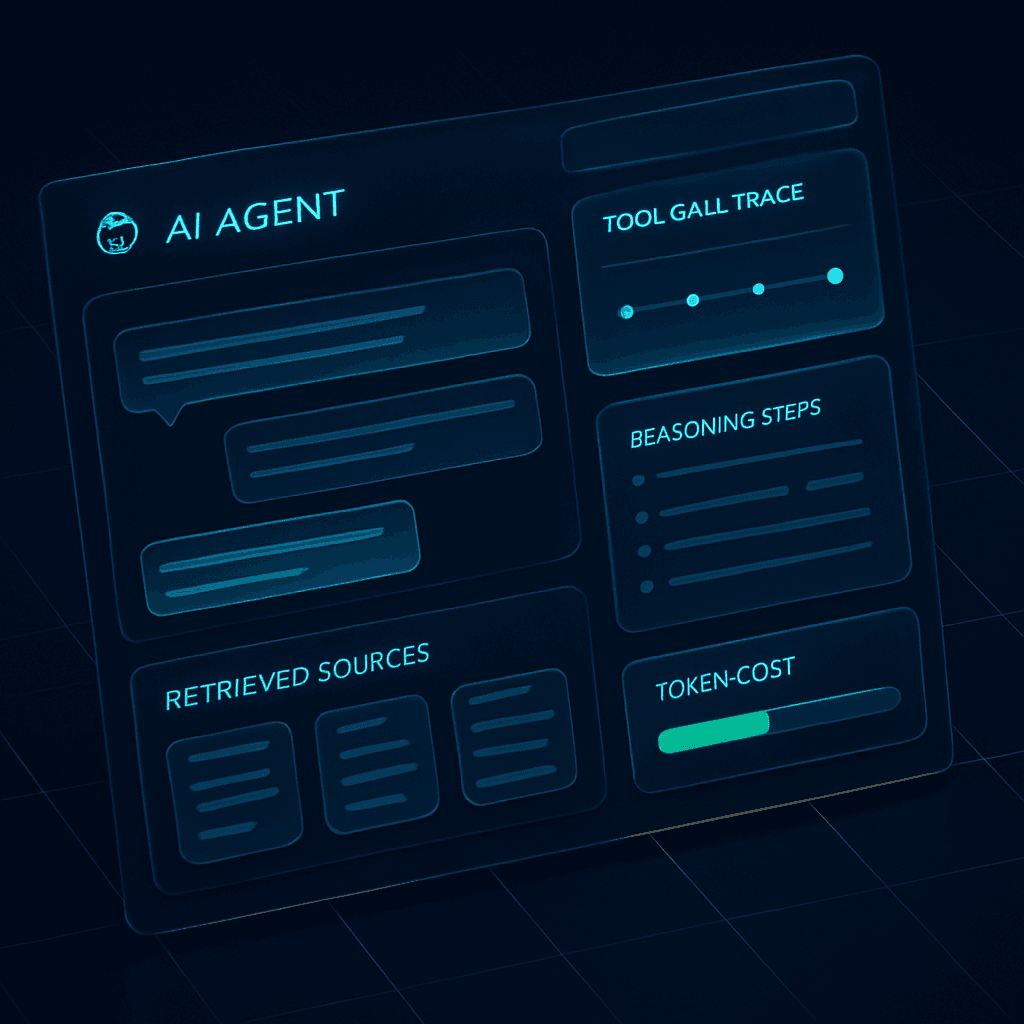
The working product: a streaming agent with tool calls, retrieved sources and a live token-cost meter.
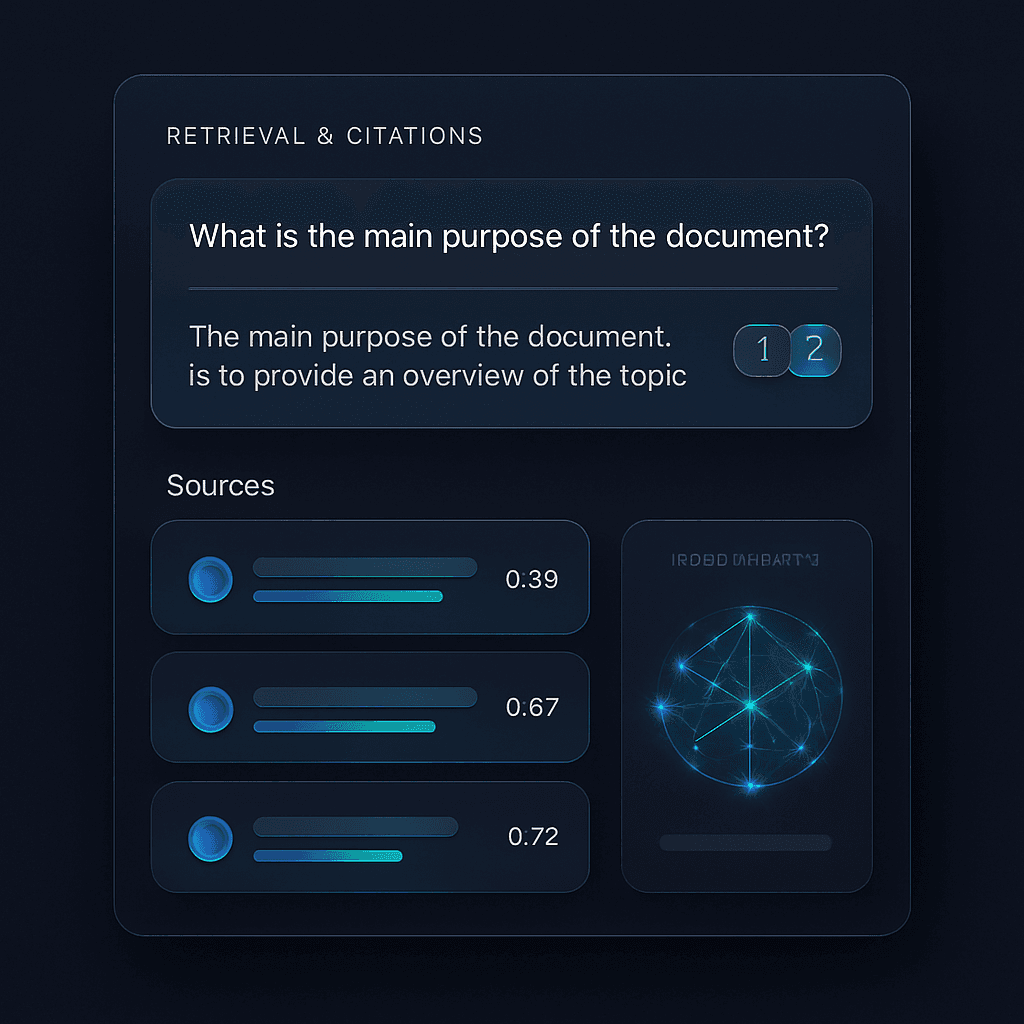
RAG over your corpus: ranked chunks, similarity scores and answers with inline, verifiable citations.
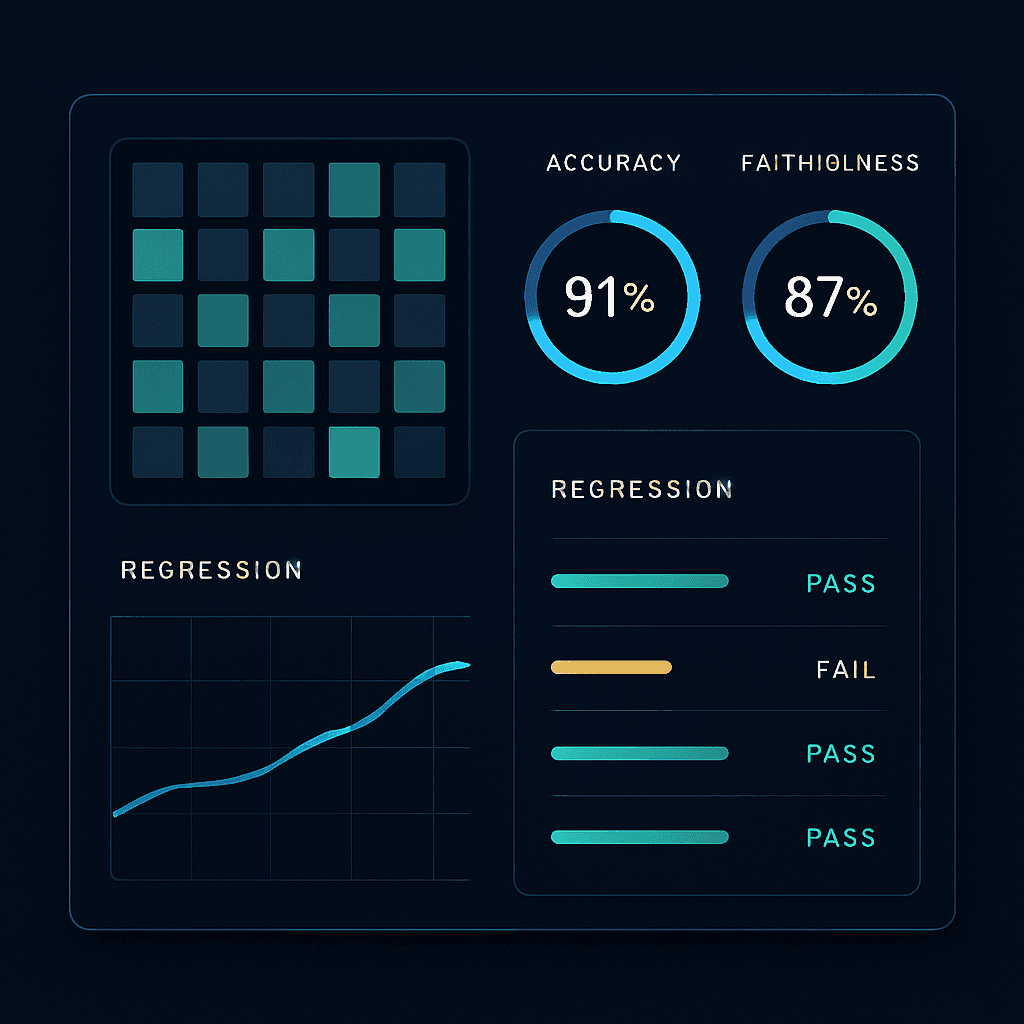
A test suite that scores accuracy and hallucination across prompt versions before anything ships.
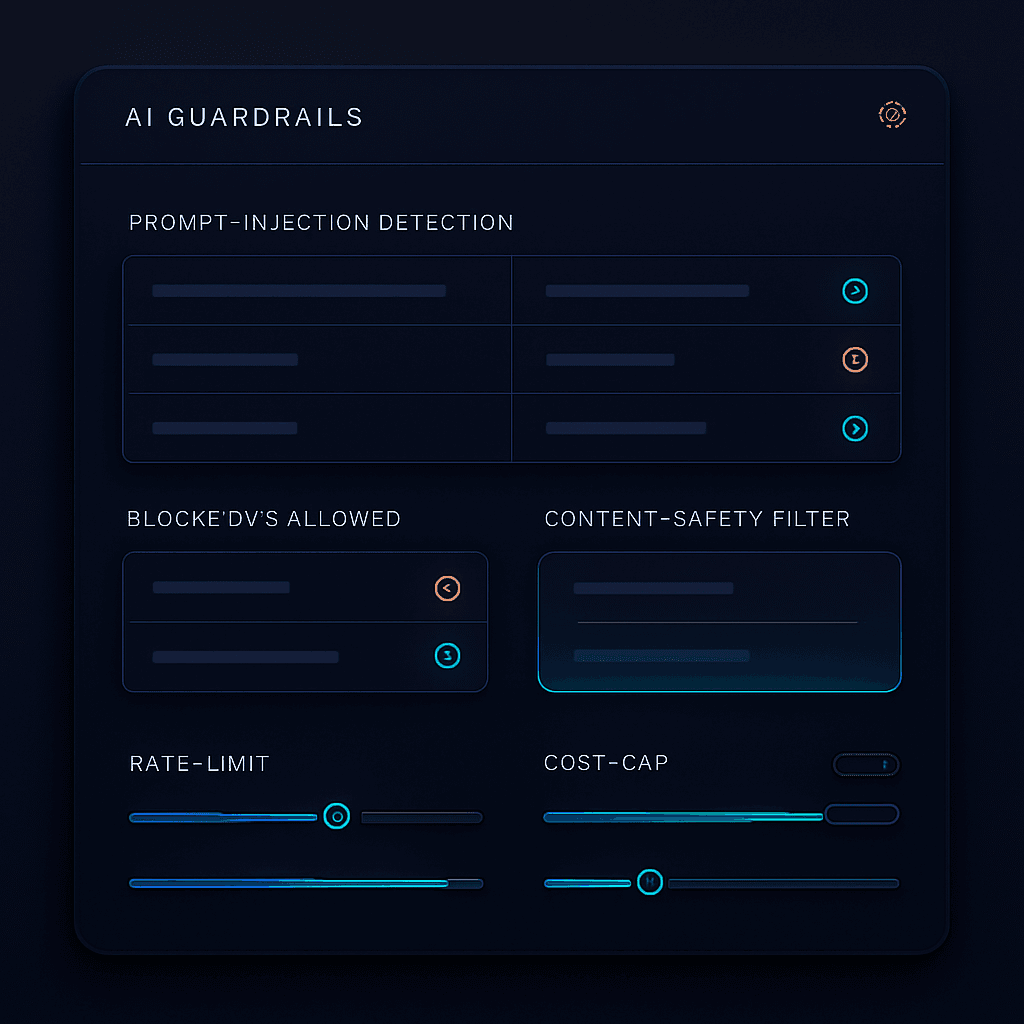
Prompt-injection detection, content safety and budget caps, with a log of what was blocked and why.

Evaluation and hardening
We try to break it before your users do.
What we build
From retrieval and agents to guardrails, evaluation and model routing, every part is built into a codebase you own on the Vercel AI SDK, with no provider lock-in.
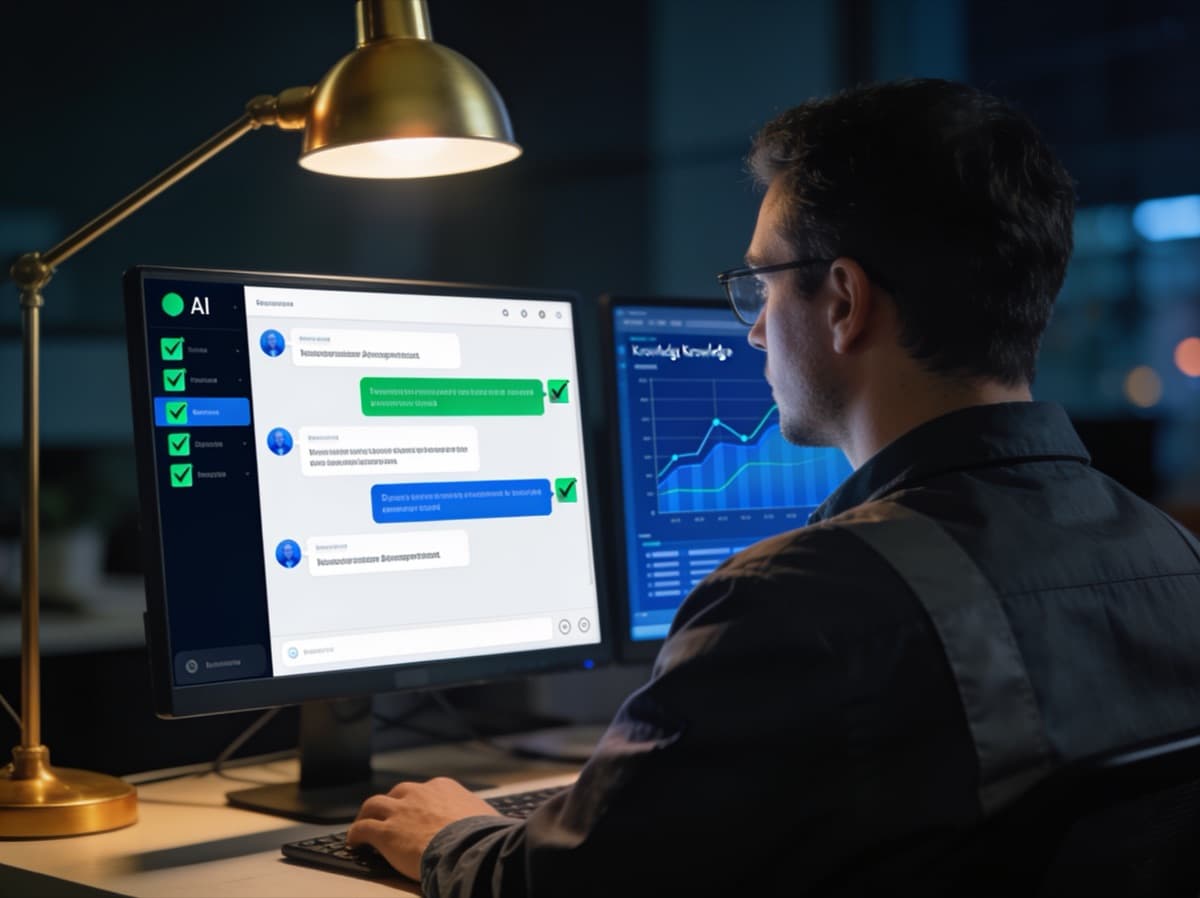
Grounded, cited, guarded
Ground answers in your own knowledge with chunking, embeddings and vector search, so responses are sourced and citable.
Agents that take action through guarded function calls, with orchestration, streaming and multi-step reasoning.
Turn messy documents into validated, typed data with schemas and confidence scoring you can trust downstream.
A prompt firewall, content filtering and output validation that stop injection, jailbreaks and unsafe responses.
Eval suites that score quality plus tracing, token spend and latency dashboards so you see everything in production.
Route each task to the right model through the AI Gateway, balancing quality, latency and cost with caps and fallbacks.
No lock-in. The stack we build your AI product on, all of it yours to own, retrain and extend.
FAQ
A real, deployed AI product: retrieval grounded on your data, an agent or assistant wired through the Vercel AI SDK, a prompt firewall and output validation, an evaluation harness, and cost and observability controls. You receive a codebase you own, not a locked demo.
Two ways. First, grounding: answers are retrieved from your own documents and returned with citations, so the model reasons over real text instead of inventing it. Second, an evaluation harness and output validation that score and catch unsupported or malformed answers before they reach users.
Yes. That is the heart of this service. We start from the idea, frame the outcome and failure modes, build a grounded prototype, then harden it into a production build. The napkin sketch is a perfectly good starting point.
Retrieval-augmented generation. Instead of relying on what a model memorised, we ingest your knowledge into a vector database, retrieve the most relevant passages for each question, and have the model answer from those. It is the difference between a confident guess and a sourced answer.
Every request passes through a prompt firewall that sanitises input, detects injection and jailbreak patterns, and enforces rate limits and per-request budget caps. Outputs are validated against a schema before use, so a crafted message cannot leak data or trigger unsafe actions.
We build on the Vercel AI SDK and AI Gateway, which let us route each task to the right model, OpenAI, Anthropic, Google and others, and switch or fall back without rewriting the app. You are never locked to a single provider.
Model routing sends cheap tasks to cheap models, caching avoids repeat work, and hard cost caps plus rate limits stop runaway spend. Observability dashboards show token spend per feature so you can see and tune cost continuously.
Yes. You own the repository, the vector store and the data inside it. There is no platform lock-in, and your proprietary knowledge stays in infrastructure you control.
Have an idea you cannot shake?
A senior engineer maps your idea to retrieval, guardrails and a working prototype plan, on a 15-minute call.
